China’s first modern university, with profound academic heritage and vibrant modern opportunities
Study at TJU (Hainan Campus)
A growing international academic community, combining diverse learning atmosphere and modern facilities
Explore the City of Tianjin
A northern Chinese port city, where historic architecture and modern urban life come together
Discover Life at TJU
A community of talented students, where creativity and teamwork inspire excellence in and beyond the classroom
Study at TJU
China’s first modern university, with profound academic heritage and vibrant modern opportunities
Study at TJU (Hainan Campus)
A growing international academic community, combining diverse learning atmosphere and modern facilities
Explore the City of Tianjin
A northern Chinese port city, where historic architecture and modern urban life come together
Discover Life at TJU
A community of talented students, where creativity and teamwork inspire excellence in and beyond the classroom
Welcome to TJU, the FIRST modern university in China!
04:41
Tianjin University is the first institution of higher education in China, pioneering the development of modern Chinese higher education.
Its history can be traced back to Peiyang University, which was founded on October 2, 1895, and renamed Tianjin University in September 1951.
In 1959, Tianjin University was appointed as one of the National Key Universities by the Central Committee of the Communist Party of China, and in 2000 was selected as one of the high-level research universities to be supported by Project 985.
Education for International Students at TJU
Emphasizing the education for international students is a fine tradition and an important feature of Tianjin University.
Since the first batch of foreign students was enrolled into TJU in 1954, the University has trained more than 20,000 international students from over 150 countries. Education provided to international students covers the whole spectrum of chemical engineering, precision instrument, machinery, construction, electronics, materials, information, computer, management, Chinese language and many other subjects.
TJU has developed a global network of alumni who are active in all walks of life around the world with positive contributions in promoting Sino-foreign cooperation.
In recent years, TJU has made great efforts to improve the quality of education while prioritising the development of international student bases. Currently, the University has 8 international student cultural experience bases, which have played an active role in guiding international students to better understand Chinese culture and promoting cultural exchanges between China and their home countries.
The establishment of the “International Student Practice Base” will help international students understand China’s economy and industrial development, helping them become international talents with both professional skills and practical experience.
The Binhai New Area in Tianjin offers excellent opportunities for international students to have practice through a new model for introducing talents from overseas. It is believed that this will enhance the development of high-quality education for international students in China.
Key Facts & Figures
2000
Current Students, including
2000
International Students
2000
Undergraduate
Programmes
0
Master’s
Programmes
0
CCN
IFP Graduates
2000+
International Students So Far, from
2000+
Countries & Regions
0
Doctoral
Programmes
0
Post-doctoral
Programmes
0
CCN Students on
Degree Programmes
Academic Strength
Play Video
06:12
TJU has formed a discipline layout that focuses on engineering, integrates science and engineering, and coordinates the development of economics, management, literature, law, and education.
TJU ranks among the global top 1% in 18 subject areas in the Essential Science Indicators (ESI), including five in the top 0.1% and three – Engineering, Chemistry, and Materials Science – in the top 0.01%.
It has risen to 235th globally and 11th nationally in the latest QS World University Rankings.
12
National Centers for Engineering Practice & Education
4
National Key Laboratories
17
Academicians of Chinese Academies of Sciences & Engineering
62
Recipients of National Science Fund for Distinguished Young Scholars
Global Ranking
2027
QS World University Ranking:
#235
QS WUR Ranking by Subject:
#34
Asian University Rankings:
#51
Graduate Employability Ranking:
#301-500
2026-2027
Best Global Universities:
#166
Best Global Universities in Asia:
#39
Chemistry:
#8
Graduate Employability Ranking:
#301-500
National Assessment by Subject
Chemical Engineering and Technology Engineering:
#1
Management Science and Engineering:
2%-5%
Instrument Science and Technology:
2%-5%
Optical Engineering:
2%-5%
Mechanical Engineering:
2%-5%
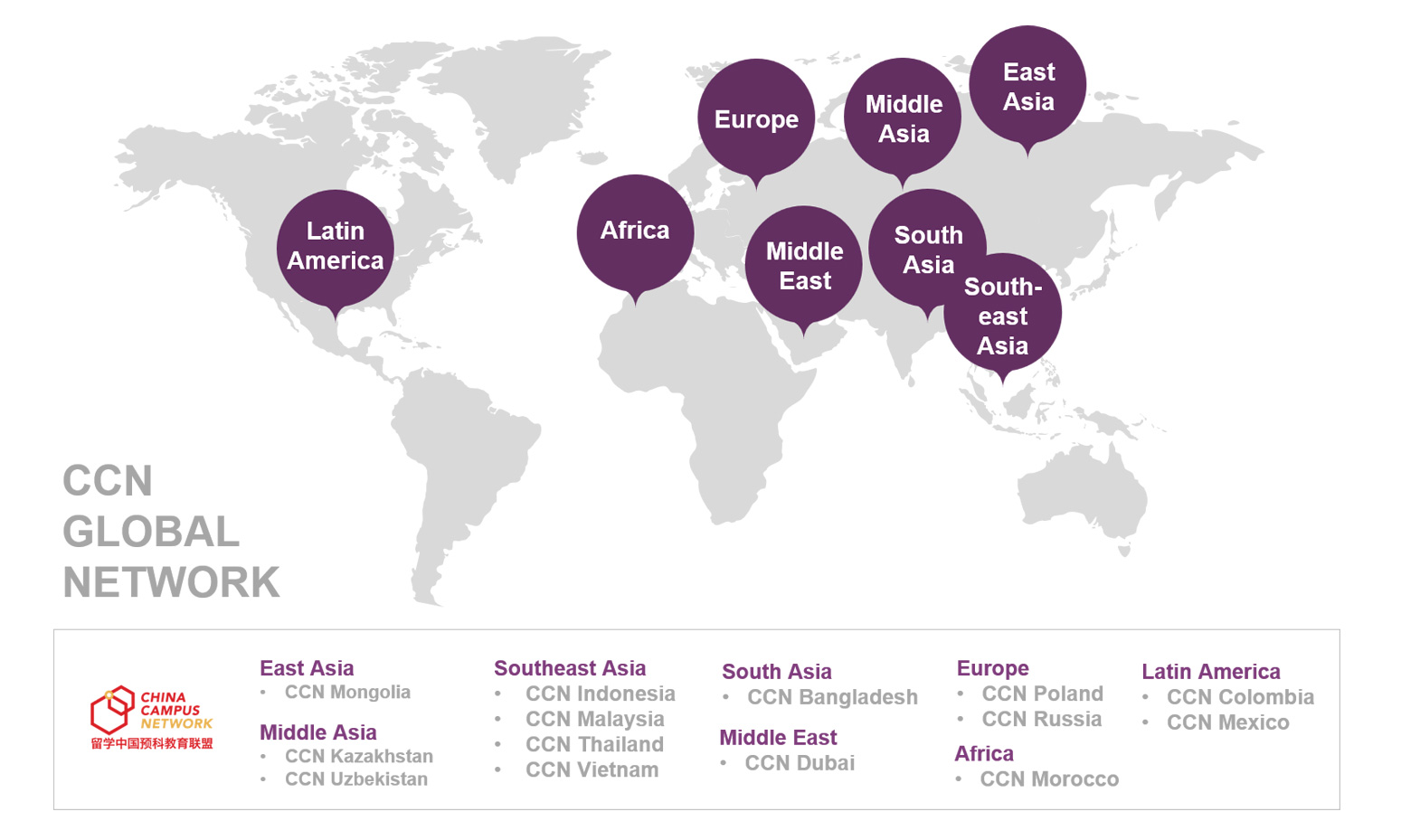
The following degree programmes are offered by TJU to international students from members of the CCN global network with authorisation.
Please click the map on the left to view the list of CCN Global Offices worldwide.
University Facilities
Teaching & Learning
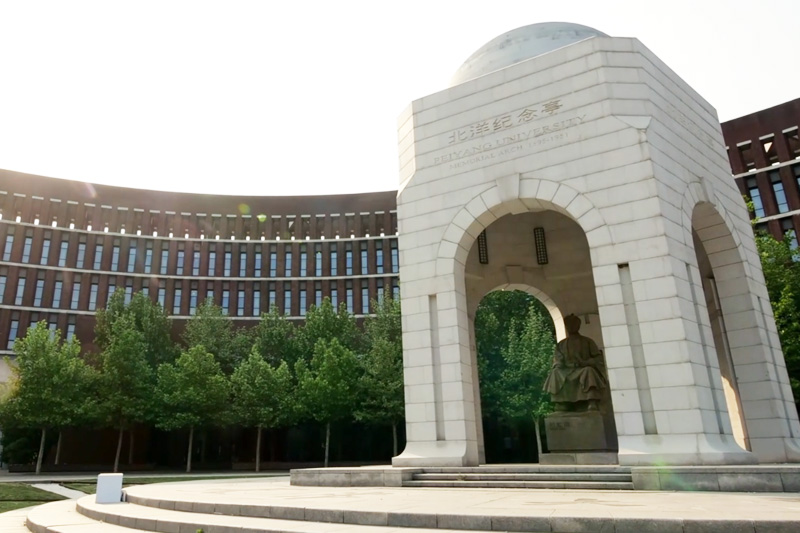
The Main Building in TJU Peiyang Campus
The building was designed by Cui Kai and his team, a member of the China Engineering Academy, who was admitted to TJU in 1981 and once served as the Chinese chief planner of Olympic venues. The design concept of the main building is open. The building and square library together form a layout of “round sky and square land”, thus “echoing each other at a distance” in space.
Zheng Dong Library
Located in Peiyangyuan Campus, Zheng Dong Library was designed by Tianjin University alumni, Zhou Kai and his team. He was also the chief Chinese architect of Beijing Olympic Park. At the 120th anniversary of Tianjin University, Zheng Dong, who was admitted to TJU in 1988, donated RMB 50,000,000 to the education fund as a gift. In order to express their thanks to him, TJU decided to name the landmark library, “Zheng Dong Library”.
Life on Campus
The Main Gate of Peiyang Campus
The main gate of Peiyang Campus was designed by Professor Peng Yigang, a member of the China Academy of Science and honorary dean of the School of Architecture. In front of the gate stand 12 stone plinths, each of them engraved with a particular time period, symbolizing the 120-year history of Tianjin University.
Seeking Truth Road
Seeking Truth Road is located along the central axis of Peiyang New Campus between the Three Questions Bridge and Zheng Dong Library. As the axis of the campus, the main building, teaching buildings, library, The Student Center and a series of buildings are spread out along this road. The name “Seeking Truth Road”comes from the Tianjin University motto “seeking truth from facts”.
Tianjin University covers a total area of 1,362,000 m2 at the Weijin Road Campus located in Tianjin downtown, an area of 2,436,000 m2 at the Peiyangyuan Campus located in Haihe Education Park, Tianjin, and an area of 30,9000 m2 at Binhai Industrial Research Institute.
Take a virtual stroll around our Weijin Road Campus and Peiyangyuan Campus with the changing of the four seasons, spring, summer, autumn, and winter.