A prestigious research university, with distinguished academic heritage in engineering and technology
Explore the City of Xi'an
An ancient Chinese capital, where historic landmarks and Silk Road heritage meet modern innovation
Discover Life at XJTU
An ambitious student community for scientific curiosity, cultural exchange and international friendships
Study at XJTU
A prestigious research university, with distinguished academic heritage in engineering and technology
Explore the City of Xi'an
An ancient Chinese capital, where historic landmarks and Silk Road heritage meet modern innovation
Discover Life at XJTU
An ambitious student community for scientific curiosity, cultural exchange and international friendships
Welcome to XJTU, a top research university in China!
06:50
Xi’an Jiaotong University (XJTU), a key university under the direct administration of the Ministry of Education, is one of China’s oldest and most prestigious higher education institutions, enjoying a strong reputation.
XJTU, was supported by the central Government at the seventh and eighth five-year plan, as well as China’s “Project 211” and “Project 985” to develop into a world-class university.
In 2017, the university was selected as a Category A institution under China’s World-Class University Development Initiative. In 2022, it was selected for the second round of the national “Double First-Class” initiative. Eight of its disciplines were selected for the national “Double First-Class” initiative, and 12 for Shaanxi Province’s “Double First-Class” initiative.
International Development of XJTU
XJTU has jointly established several educational institutions and programmes, including Xi’an Jiaotong-Liverpool University, the XJTU-POLIMI Joint School of Design and Innovation, and two Confucius Institutes, respectively located at the University of Liverpool in the United Kingdom and Yamanashi Gakuin University in Japan. It has also collaborated with Samarkand State University in Uzbekistan to establish a China Center, pioneering an innovative “language + technology” cooperation model in Central Asia.
XJTU initiated the University Alliance of the Silk Road, attracting 207 universities from 45 countries and regions to join diverse cooperation efforts.
XJTU has established 147 international undergraduate student recruitment bases across 28 countries and regions. In 2024, it achieved the highest rating of Class A+ in the re-certification of higher education quality for international students in China.
Key Facts & Figures
2000
Current Students, including
2000
International Students
2000
Undergraduate
Programmes
2000
First-level Disciplines
for Master’s Degrees
0
CCN
IFP Graduates
2000+
Research Achievements, including
2000
Winning Top National Awards
2000
First-level Disciplines
for Doctoral Degrees
2000
Post-doctoral
Research Stations
0
CCN Students on
Degree Programmes
Academic Strength
XJTU is now a comprehensive research university with 11 major disciplines: science, engineering, medicine, economics, management, humanities, law, philosophy, art, education, and inter-disciplines.
It has built the Western China Science and Technology Innovation Harbour (iHarbour) and constructed eight major platforms, 30 research institutes, and over 400 research bases and think tanks focusing on four primary areas: science, engineering, medicine, and the humanities.
XJTU has achieved numerous landmark successes in scientific research both domestically and internationally. According to data released by Essential Science Indicators (ESI) in September 2026, 19 disciplines at XJTU ranked in the top 1% globally among academic institutions, with six disciplines ranking in the top 1‰. Among them, engineering ranked in the top one-ten-thousandth, making it seventh globally.
8
National Key First-level Disciplines
11
National Key Laboratories
10
National Engineering Technology Research Centers
96
Academicians of Chinese Academies of Sciences & Engineering
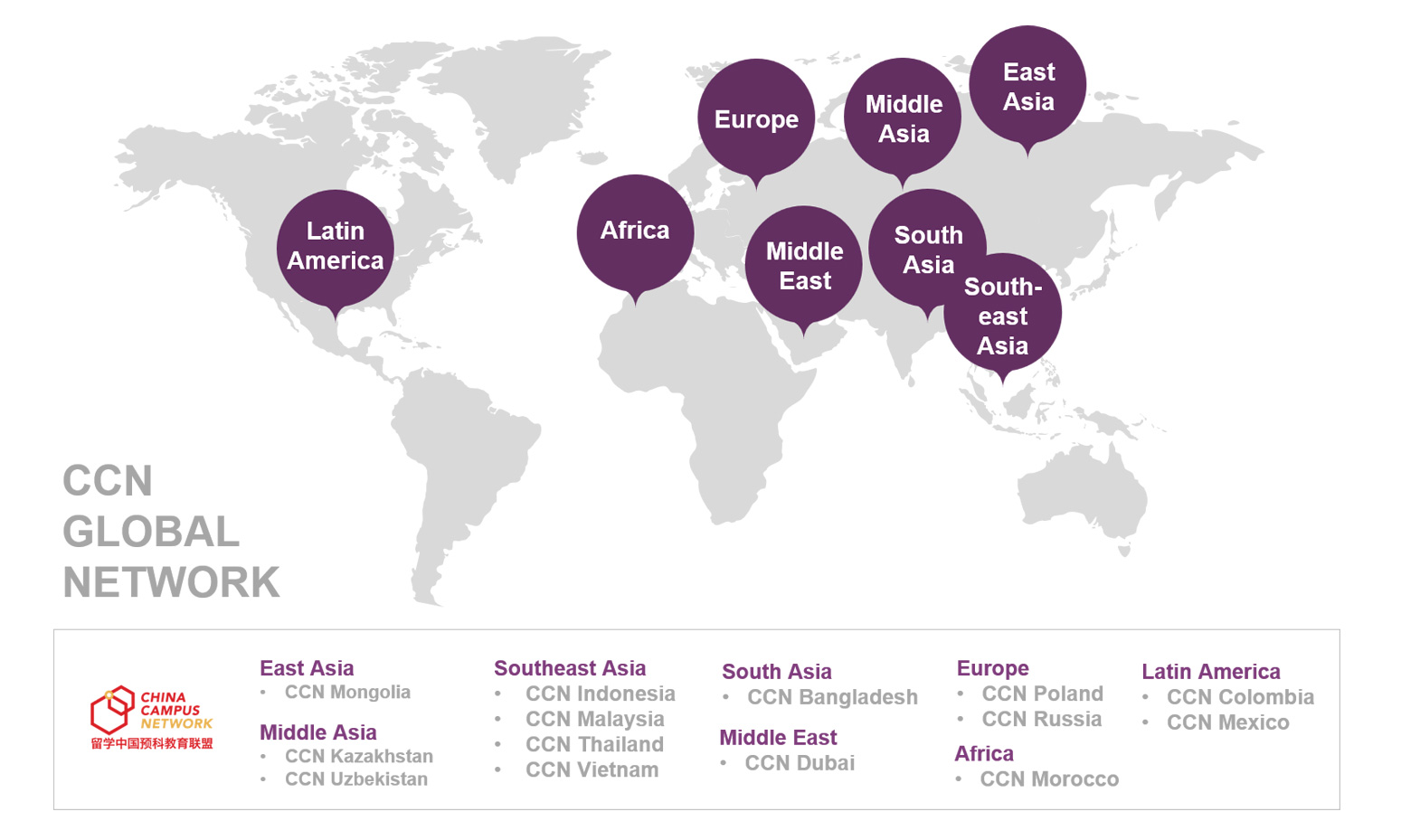
The following degree programmes are offered by XJTU to international students from members of the CCN global network with authorisation.
Please click the map on the left to view the list of CCN Global Offices worldwide.
University Facilities
Teaching & Learning
Xi’an Jiaotong University has four campuses:
Xingqing campus
Yanta campus
Qujiang campus
Western China Science & Technology Innovation Harbor (IHarbour)
The Main Building in TJU Peiyang Campus
The building was designed by Cui Kai and his team, a member of the China Engineering Academy, who was admitted to TJU in 1981 and once served as the Chinese chief planner of Olympic venues. The design concept of the main building is open. The building and square library together form a layout of “round sky and square land”, thus “echoing each other at a distance” in space.
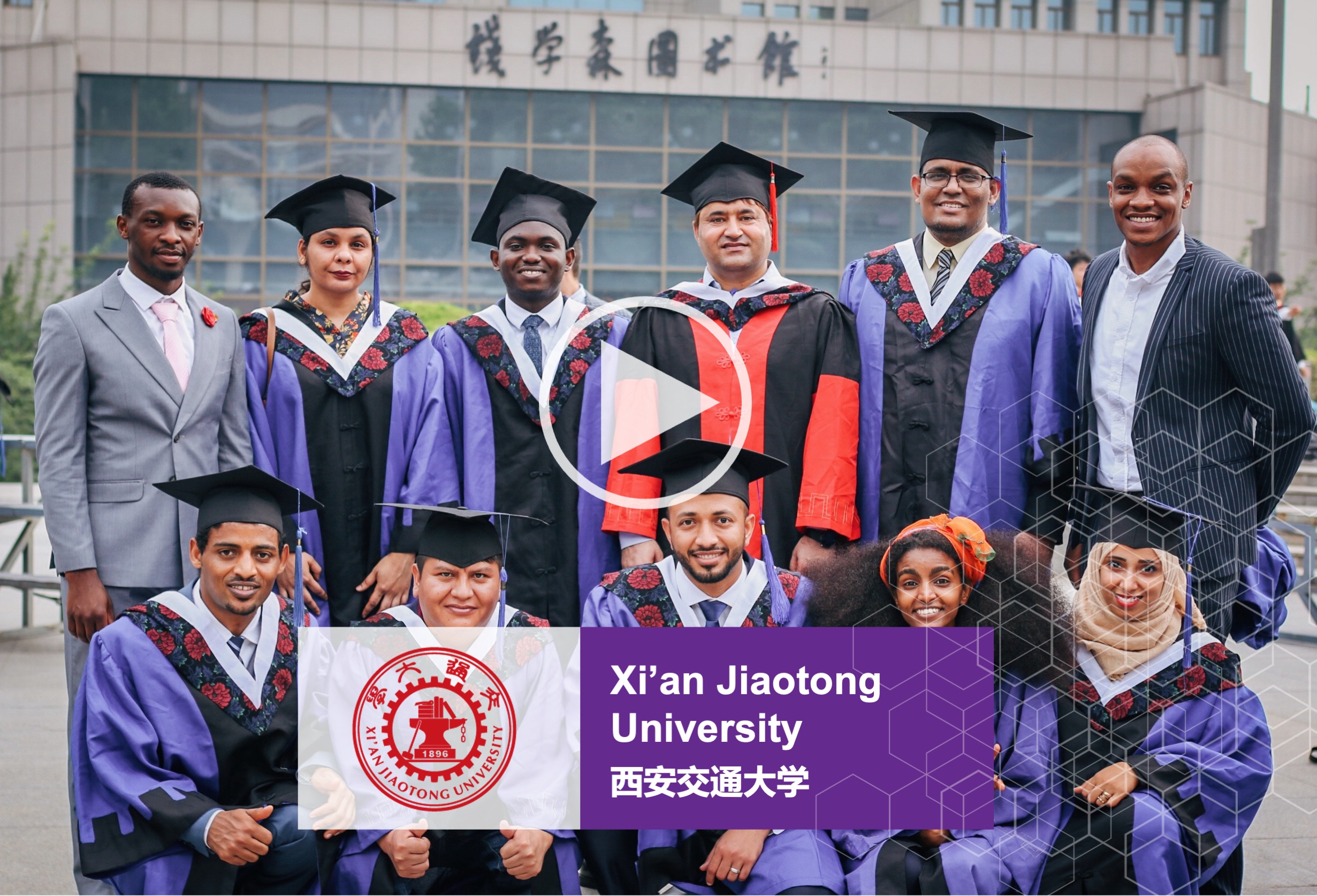
The “Qian Xuesen Library,” named after alumnus Qian Xuesen, is located on the Xingqing campus, covering nearly 40 thousand square meters and has 3,518 reading seats. The library collections include 5.63 million books and over 10,000 newspapers and periodicals, of which over 1,500 types are current periodicals. The library has also been improving its digital collections, and has introduced 118 electronic resources at home and abroad and the total number of electronic resources amounts to 320. Its holdings now include 110,000 electronic periodicals and 1.6 million e-books in Chinese and foreign languages.
Zheng Dong Library
Located in Peiyangyuan Campus, Zheng Dong Library was designed by Tianjin University alumni, Zhou Kai and his team. He was also the chief Chinese architect of Beijing Olympic Park. At the 120th anniversary of Tianjin University, Zheng Dong, who was admitted to TJU in 1988, donated RMB 50,000,000 to the education fund as a gift. In order to express their thanks to him, TJU decided to name the landmark library, “Zheng Dong Library”.
The Western China Science & Technology Innovation Harbor has established 8 major research platforms, 25 institutes and more than 100 scientific research bases to serve the major scientific research in China. The IHarbor will better serve the cultivation of students’ creativity, the commercialization and incubation of scientific and technological achievements and the development of economy and society. Here we can actively explore new models, new forms and new experiences of the integration of modern universities and social development in twenty-first Century.
Life on Campus
XJTU owns a National-level Base for Cultural Education and boasts 230 student organizations. It sponsors a rich and varied set of activities in science and technology, literature and the arts, and sports. “Talking Freely about the World”, “Siyuan Lectures”, “Learning Forum” and “IHarbour Lectures” have become well-known events from which students and staff can expand their field of horizon. In recent years, XJTU students have won awards in a wide range of competitions.
Dormitory buildings for international students are appropriately laid out, equipped with necessary electric appliances, studying rooms, communal kitchens, canteens and laundry rooms. Students can also use other campus facilities such as basketball court, sports ground, teaching buildings and libraries. Buses and restaurants, which can satisfy the dietary needs of international students, are available in the neighborhood.
The Main Gate of Peiyang Campus
The main gate of Peiyang Campus was designed by Professor Peng Yigang, a member of the China Academy of Science and honorary dean of the School of Architecture. In front of the gate stand 12 stone plinths, each of them engraved with a particular time period, symbolizing the 120-year history of Tianjin University.
Seeking Truth Road
Seeking Truth Road is located along the central axis of Peiyang New Campus between the Three Questions Bridge and Zheng Dong Library. As the axis of the campus, the main building, teaching buildings, library, The Student Center and a series of buildings are spread out along this road. The name “Seeking Truth Road”comes from the Tianjin University motto “seeking truth from facts”.
Please click here to explore campus life at TJU.
Campus Tour
05:59
Play Video
Tianjin University covers a total area of 1,362,000 m2 at the Weijin Road Campus located in Tianjin downtown, an area of 2,436,000 m2 at the Peiyangyuan Campus located in Haihe Education Park, Tianjin, and an area of 30,9000 m2 at Binhai Industrial Research Institute.
Take a virtual stroll around our Weijin Road Campus and Peiyangyuan Campus with the changing of the four seasons, spring, summer, autumn, and winter.